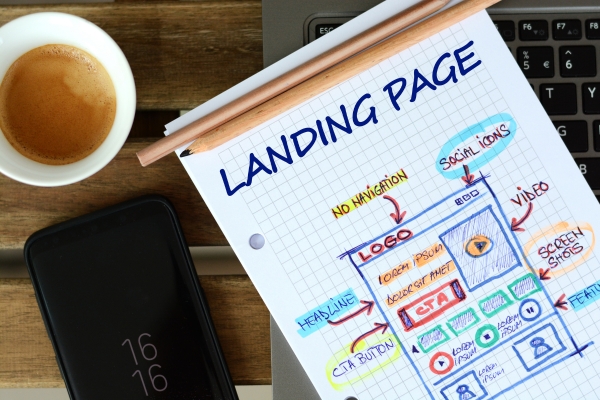
Visitors rarely decide to contact a business by chance. Every click, scroll, and interaction influences their final decision. A website may attract steady traffic, but that traffic has little value without conversions. Building a high-converting landing page means creating an experience that guides visitors naturally toward a single goal.
Unlike a homepage, a landing page supports one campaign and one audience. It removes distractions and keeps users focused on taking action. Every section should reinforce the same message while addressing customer concerns. When visitors immediately understand the value of your offer, they are more likely to stay engaged.
Successful landing pages combine persuasive messaging with strong user experience (UX), thoughtful design, and data-driven improvements. A well-optimised landing page delivers stronger conversion results. It also helps generate more leads without increasing advertising spend.
A High-Converting Landing Page Removes Friction From the Customer Journey
A visually appealing landing page is only one part of success. Conversions depend on the complete user experience. In reality, visitors respond more strongly to clarity than creativity. Building a high-converting landing page begins by removing every obstacle that interrupts the customer journey.
Your value proposition should appear immediately above the fold. Visitors should understand what you offer, who you help, and why your solution is different within seconds. Every page should contain one clear CTA that supports a single conversion goal. Multiple offers often divide attention and reduce the conversion rate.
Navigation should also remain simple. Every unnecessary link creates another opportunity for visitors to leave the page. Faster page speed, logical user flow, and intuitive layouts help users complete actions with less effort. These improvements also reduce bounce rate, especially for mobile users.
For example, a Phoenix cosmetic dental clinic advertising teeth whitening should send visitors to a dedicated service page. The page should explain benefits, answer common questions, display patient reviews, and include a simple booking form. Matching campaign messaging with customer expectations creates a smoother buying experience.
Expert Insight: The highest-performing landing pages answer customer questions before visitors need to ask them.
Great Design Supports Decisions, Not Decoration
Effective design helps visitors make confident decisions. It should never distract from the page’s primary objective. Successful high-converting landing page performance depends on balancing visual appeal with usability and measurable business outcomes.
Strong trust signals reduce uncertainty throughout the buying process. Customer testimonials, certifications, guarantees, awards, and security badges reassure visitors before they submit personal information. Short forms also improve form optimisation because they reduce effort during the first interaction.
Businesses should avoid assuming every design change improves results. CRO depends on continuous measurement. Regular A/B testing allows marketers to compare headlines, CTA buttons, layouts, and images using real customer behaviour instead of opinions. Data-driven decisions produce more reliable improvements than subjective design preferences.
For example, a Phoenix financial planning firm may test two consultation pages. One highlights investment expertise, while the other focuses on retirement planning. Testing both versions helps identify which message generates more qualified enquiries. At Phoenix Leads Lab, every landing page recommendation is supported by performance data rather than assumptions.
Measure Performance Before Making Major Changes
Disappointing conversion results often encourage complete landing page redesigns. Targeted improvements usually deliver better outcomes. Improving a high-converting landing page starts with understanding how visitors interact with the existing page.
Analytics tools provide valuable insights into visitor behaviour. Heatmaps and session recordings reveal where users click, stop scrolling, or leave the page. These findings help identify friction that reduces conversions. Businesses should compare this behaviour with their conversion rate before making design decisions.
Testing should become part of every optimization process. Small improvements often deliver better results than dramatic redesigns. Businesses can test headlines, CTA buttons, images, and page layouts through regular A/B testing. Each experiment should measure one variable at a time to produce reliable data.
For example, a Phoenix real estate agency may discover that moving its enquiry form higher on the page increases completed enquiries. Small adjustments often create measurable improvements without increasing advertising costs.
Landing Page Optimization Is an Ongoing Process
Strong websites improve through ongoing refinement. Regular updates reflect changing customer expectations and industry trends. Effective landing page optimization helps solve issues with a high-converting landing page by refining every stage of the visitor experience.
Review important performance indicators every month. Monitor bounce rate, form completion rate, conversion rate, and page engagement. These metrics highlight where visitors lose interest and where improvements produce the greatest impact. Businesses should also review mobile responsiveness because many users now complete enquiries on smartphones.
Landing pages should remain aligned with advertising campaigns, customer expectations, and business goals. Updating content, improving trust signals, and simplifying navigation help maintain strong performance over time. Consistent optimisation usually produces better results than occasional redesigns.
At Phoenix Leads Lab, landing pages are improved through continuous testing, behavioural analysis, and performance measurement. Every recommendation is designed to increase qualified enquiries using measurable evidence rather than assumptions.
Small Improvements Often Produce the Biggest Results
Successful landing pages are rarely built in a single attempt. They improve through careful testing, customer insights, and ongoing refinement. Businesses that regularly evaluate a high-converting landing page create better user experiences while increasing the value of every marketing campaign.
The most effective strategy is not chasing perfect design. It is making informed decisions that remove friction, strengthen trust, and encourage visitors to take the next step with confidence.
Frequently Asked Questions
1. What makes a high-converting landing page successful?
A successful landing page has a clear value proposition, strong CTA, fast loading speed, trust signals, and messaging that matches visitor intent.
2. Why is landing page optimization important?
Landing page optimization improves user experience, increases conversion rates, and helps businesses generate more qualified leads without increasing advertising spend.
3. How does A/B testing improve landing pages?
A/B testing compares different page elements to identify which version generates better engagement and higher conversion rates.
4. Should every marketing campaign have its own landing page?
Yes. Dedicated landing pages create better message consistency and improve conversions by matching the visitor’s search intent and expectations.